A. Repetition - simple relationships of identical or similar
lines, shapes, forms, textures, values, or colors that create a pattern
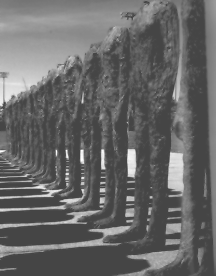
Magdalena Abakanowicz,
Bronze Crowd 1988
pattern - a discernible, coherent system based on
the intended relationship of component parts
B. Variety - the repetition and contrast of a central theme
Betye Saar, Eye of
the Beholder 1994
relationship - connected by reason of established or
discoverable relation
C. Rhythm - repetition of similar or varying elements in a
design that mark the movement of the viewer's eye through the work
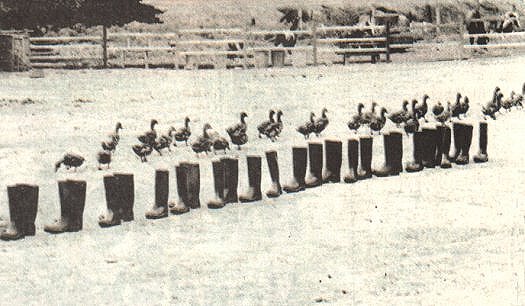
1. Legato - connected and flowing 1971
Eleanor Antin, 100 Boots Move On
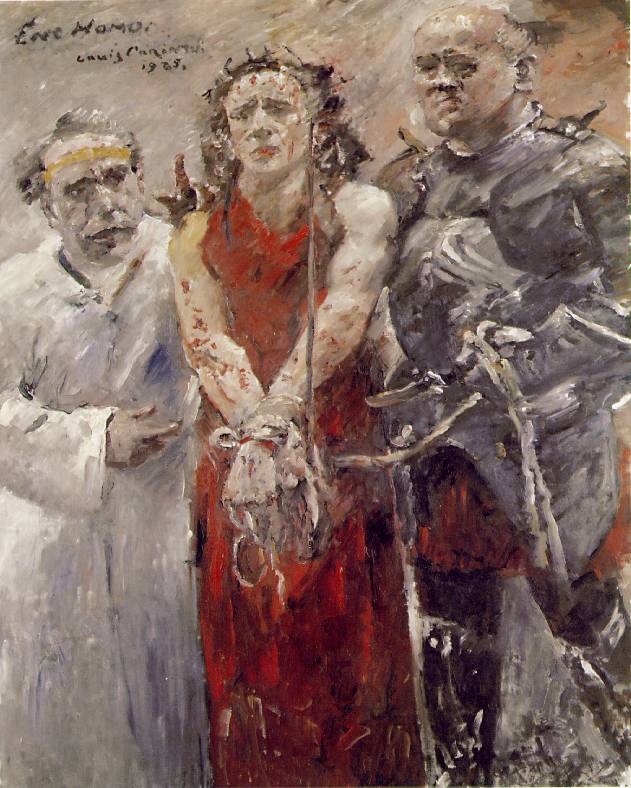
2. Staccato - abrupt and dynamic
Lovis Corinth, Ecce Homo
1917
3. Alternating - two motifs alternate with one another to
produce a regular (and soon anticipated) sequence
4. Progressive - repetition of an element that changes in a
regular manner Pinwheel Aperiodic Tiling,
Charles Radin,
illustration
D. Balance - stability produced by even distribution of visual
weight on each side of an axis (horizontal/vertical/diagonal)
visual weight is affected by color, value, detail,
size, position, etc. (i.e. farther a figure from center, the more visual
weight it has)
1. Symmetrical - exactly the same visual weight on either
side of balancing point Ed Paschke,
Adria
1976
2. Asymmetrical - figures differing in visual weight
carefully arranged to create the appearance of balance
Edourd Manet, On the Beach 1873
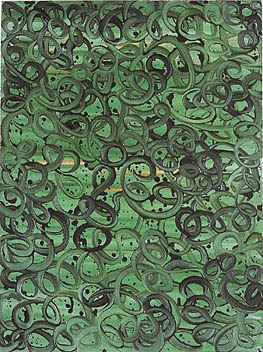
3 Crystallographic - constant repetition of the same quality
everywhere on the surface (allover pattern)
Jean Foos, Untitled 39-2000 2000
E. Proportion - geometric or arithmetic distribution of visual
weight within an object
The
Golden
Mean has both: See
Dali,
DaVinci
1. geometric - exists when a quantity is changed by adding
some amount
2. arithmetic - exists when a quantity is changed by
multiplying some amount
F. Emphasis - establishing a focal point through placement,
contrast, isolation, size, etc. Odd Nerdrum,
The Brick 1990 (larger)
focal point - element or area toward which viewer's
eye is drawn
accents - secondary points of emphasis
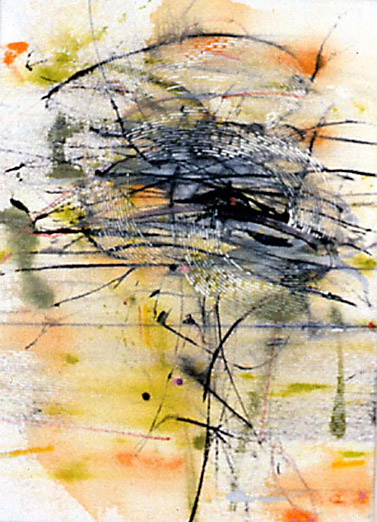
1. Central - toward the center areas
Myrna Burks It Happened 2001
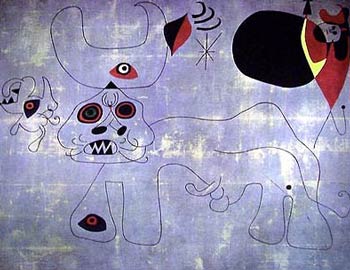
2. Peripheral - along the outer areas
Miro
Bullfight
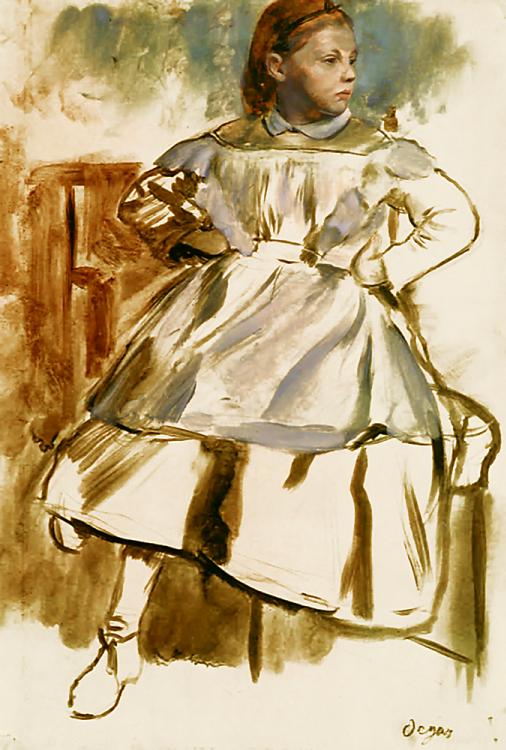
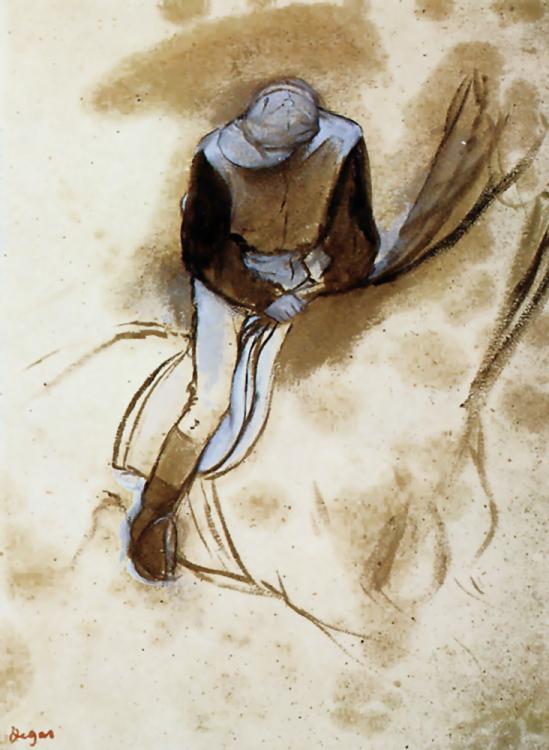
G. Economy - using only what is needed to create the intended
effect Degas,
Jepthah's Daughter 1857
cropping - showing only enough of the information to give
viewers enough information to complete the picture mentally
Joanne Domka, Palms 1990